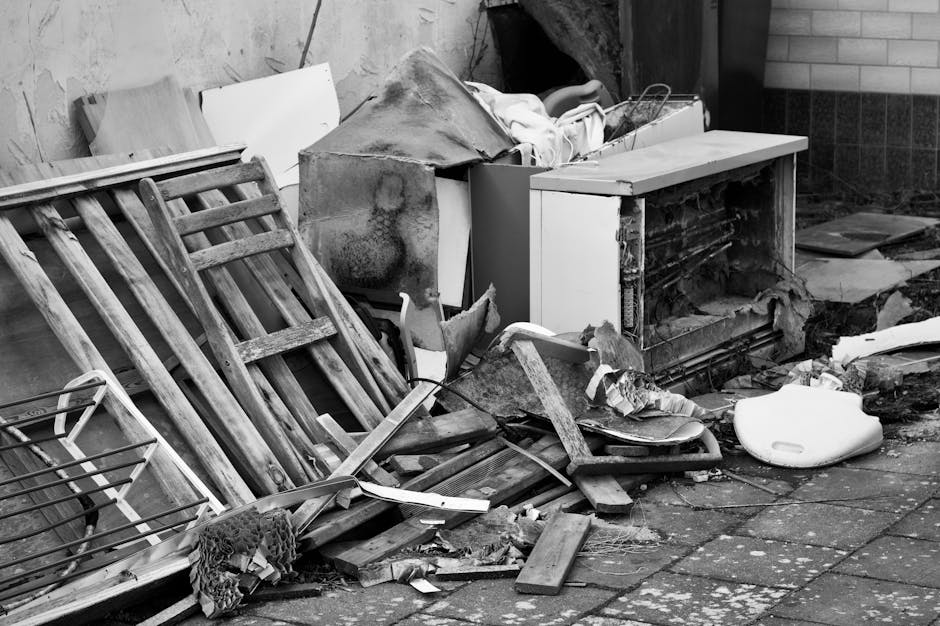
KT6 flats rubbish clearance near Seething Wells Surbiton
If you are dealing with overflowing bins, an end-of-tenancy tidy-up, or a stack of awkward items in a KT6 flat near Seething Wells, you already know the problem is rarely just "rubbish". It is access, stairs, parking, timing, neighbours, and the simple fact that flat clearance can become messy fast. This guide to KT6 flats rubbish clearance near Seething Wells Surbiton explains how it works, what to expect, what to avoid, and how to choose the right approach without overcomplicating the job.
Whether you are clearing a studio, a top-floor maisonette, or shared accommodation with a few too many forgotten chairs and boxes, the aim is the same: get the place clear, keep things tidy, and handle waste responsibly. Let's make it straightforward.
Why KT6 flats rubbish clearance near Seething Wells Surbiton matters
Flat clearance in KT6 is not the same as clearing a house with a drive and a garage. In and around Seething Wells, many homes involve shared entrances, tighter stairwells, limited stopping space, and the kind of access that makes even a small sofa feel strangely heroic. If you have ever tried to move a wardrobe down a narrow communal stairwell while someone else is coming up with shopping bags, you will know the vibe.
That is why local rubbish clearance matters. It is not just about getting rid of things. It is about doing it in a way that works for the building, respects neighbours, and avoids creating extra stress for you. A good clearance can reduce clutter quickly, prevent fire hazards in communal areas, and stop waste from lingering in hallways or balconies where it becomes a nuisance.
It also matters because flats often generate mixed waste streams. You may have furniture, broken appliances, cardboard, small electrical items, textiles, and general rubbish all in one job. Sorting that correctly can be the difference between a smooth clearance and a frustrating half-day of re-bagging and reshuffling. If you need a broader overview of flat-focused support, the flat clearance service is the most relevant place to start, while larger combined jobs may sit better under home clearance or house clearance.
Expert summary: In flat settings, the biggest wins usually come from good planning, clear item sorting, and choosing a clearance method that suits the building rather than fighting against it.
How KT6 flats rubbish clearance near Seething Wells Surbiton works
Most flat rubbish clearance jobs follow a simple pattern, even if the building itself is a bit awkward. First, the items are assessed. Then the clearance is planned around access, volume, and what needs special handling. Finally, the waste is removed, loaded, and taken for sorting, recycling, or disposal.
In practical terms, the process often starts with a few questions: How much needs removing? Is it bagged, boxed, or loose? Are there stairs, lifts, or loading restrictions? Are there bulky items such as beds, wardrobes, white goods, or mattresses? The answers shape everything else. A one-bedroom flat with a few bags is very different from a shared flat with a hallway full of old furniture and broken storage units.
In a well-run clearance, the team will usually work room by room. That saves time and prevents items being moved around twice. It also helps when there are items that need to be separated, such as metal, wood, electrical waste, or appliances. For furniture-heavy clearances, it can help to look at furniture clearance or furniture disposal. If a mattress, sofa, fridge, or washing machine is involved, those category pages are more specific: mattress and sofa disposal and fridge and appliance removal.
A sensible clearance also pays attention to the building itself. Communal carpets, walls, and bannisters are easily marked when bulky waste is dragged carelessly. A careful team uses the right lifting technique, the right tools, and a calm pace. Nothing dramatic. Just proper handling, really.
Key benefits and practical advantages
There are good reasons why residents, landlords, and managing agents often prefer a dedicated rubbish clearance service for flats rather than trying to chip away at the job over several weekends.
- Faster reset of the space - useful before a move-out, re-let, sale, or refurbishment.
- Less lifting and less strain - especially where stairs are involved.
- Cleaner communal areas - no bags sitting in corridors "just for a bit", which somehow becomes three days.
- Better sorting of mixed waste - helpful when rubbish, furniture, and appliances are all together.
- Reduced stress - a huge benefit when time is tight and the place feels too full to begin with.
- More responsible disposal - recyclable materials can be separated more effectively.
Another practical advantage is flexibility. In flats, you often cannot just leave waste outside and hope for the best. Timing matters. Neighbours matter. The building rules matter. A good clearance plan fits around those realities instead of pretending they do not exist.
For people comparing ways to handle bulky items, it is also worth checking what can go in a skip via what can go in a skip. That helps you decide whether a skip, a collection, or a full flat clearance is the better fit. Truth be told, sometimes the simplest-looking option is not the best one.
Who this is for and when it makes sense
KT6 flats rubbish clearance near Seething Wells Surbiton suits a wide range of people. It is not only for dramatic clear-outs. Quite often, it is for the ordinary moments that pile up into a job that feels bigger than expected.
Typical situations
- Tenants moving out and needing to leave the flat clear and presentable.
- Landlords or letting agents preparing a property between occupancies.
- Homeowners dealing with years of clutter after a life change.
- Shared flats where communal areas have become a dumping ground for "temporary" items.
- Families helping relatives with a sensitive clear-out.
- People downsizing and deciding what stays and what goes.
It also makes sense when the waste is awkward rather than huge. A few chairs, a broken wardrobe, mixed bags, a television you do not want to move yourself, and a couple of boxes of forgotten stuff can turn into a surprisingly annoying weekend project. That is often the point where professional removal starts looking less like a luxury and more like common sense.
If the job extends beyond one flat and includes loft space, storage cupboards, or a shared garage, related services such as loft clearance or garage clearance may be more suitable. For larger domestic clear-outs, house clearance can be a better fit.
Step-by-step guidance
Here is a simple way to approach flat rubbish clearance without getting overwhelmed.
- Walk through the flat first. Look at every room, cupboard, balcony, and storage corner. It is amazing how much appears once you stop ignoring the back of the wardrobe.
- Separate items into clear groups. Keep general rubbish, reusable furniture, electricals, and anything possibly hazardous apart.
- Measure the bulky pieces. Doors, stair turns, and lift sizes matter more than people expect.
- Check access and parking. In KT6 and around Seething Wells, access can be the difference between a quick job and a fiddly one.
- Decide what needs specialist handling. Fridges, mattresses, damaged paint tins, or old chemicals should not be treated like ordinary waste.
- Book the right type of clearance. A small pickup is fine for bagged rubbish; a bigger mixed load may need a broader flat clearance or waste removal solution.
- Prepare the route. Move small items out of the way and keep hallways clear so the team can work safely.
- Final sweep. Check cupboards, behind doors, under beds, and on balconies. Those are the classic hiding places.
If you are unsure whether your load is mostly furniture, mixed junk, or general rubbish, it helps to compare service types. Waste removal is useful for broader mixed loads, while furniture clearance is better when the main issue is bulky items. A small distinction, but it saves hassle.
Expert tips for better results
From a practical point of view, the best flat clearances are usually the ones that are quietly organised. Not flashy. Just tidy and well thought through.
- Start with the biggest obstacle. If the wardrobe or sofa is blocking access, clear that first.
- Label anything you want to keep. In a busy flat, "maybe" items have a habit of going walkabout.
- Keep fragile items separate. Glass frames, mirrors, and ceramics need a different touch.
- Do not mix hazardous waste in with ordinary rubbish. It complicates the job and can create safety issues.
- Use bags that can actually be lifted. Overfilled bin bags are a classic mistake. Heavy, split, annoying. Nobody enjoys that.
- Plan the timing around building life. Avoid school-run traffic, delivery windows, or moments when the stairwell is already busy.
- Photograph the space before and after. This is especially useful for landlords, agents, and tenants documenting handover.
A small but important point: if your flat includes older appliances, you should not assume they can just be carried away with everything else. Check whether separate appliance handling is needed. For example, fridges and freezers are handled differently from normal furniture, which is why a dedicated appliance removal option can be the neatest route.
And one more thing. If a job feels chaotic at the start, that is normal. Most clearances do. Once the first few items are gone, the whole place starts to breathe again. Funny how that works.
Common mistakes to avoid
Flat rubbish clearance problems usually come from a few predictable errors. The good news? Most of them are easy to avoid.
- Underestimating volume. A flat that looks "only a bit cluttered" can hide a much bigger load.
- Leaving sorting until the last minute. That usually means mixed waste becomes one expensive tangle.
- Blocking communal spaces. Hallways and landings are not storage. Residents notice, and rightly so.
- Forgetting about access. A service lift, stair width, or parking restriction can change the entire plan.
- Ignoring specialist waste. Old paint, broken electronics, or damaged items may need separate handling.
- Choosing a method before checking the contents. Sometimes a skip is fine; sometimes a clearance crew is better; sometimes both are overkill.
There is also a softer mistake people make: trying to do everything at once. In practice, a flat clearance is easier if you treat it as a sequence of small wins. One cupboard, one room, one pile, then the next. Not glamorous, but it works.
Tools, resources and recommendations
You do not need a huge toolkit for flat rubbish clearance, but a few basic items make life easier.
- Heavy-duty bin bags for general rubbish and soft waste.
- Sturdy boxes or tubs for reusable or fragile items.
- Gloves for protection when handling dusty, sharp, or awkward materials.
- Mask and wipes if the flat has been left closed up or dusty for a while.
- Tape and labels to mark keep, recycle, donate, and dispose.
- Measuring tape for doors, stair bends, and furniture dimensions.
From a service perspective, a few pages can help you make better decisions before booking. Pricing and quotes is useful if you want to understand how jobs are usually assessed, while recycling and sustainability is a sensible read if you want a clearer picture of what happens after collection. If your job is commercial rather than residential, or you are helping out a landlord business, business waste removal may be more relevant.
There is also a straightforward practical recommendation here: do not wait until the pile becomes unbearable. It is always easier to clear a flat when items are still sorted and accessible than when the room has turned into a storage maze.
Law, compliance, standards, or best practice
Flat rubbish clearance in the UK should be handled with care, especially where waste is mixed, bulky, or potentially hazardous. You do not need to become an expert in waste law overnight, but a few best-practice principles matter.
First, waste should be handled by a responsible carrier and taken to an appropriate disposal or recycling route. Second, items should be separated where possible so recyclable materials are not needlessly mixed with general waste. Third, anything hazardous, sharp, contaminated, or potentially harmful should be treated cautiously and not shoved into ordinary bags "just to get it out the door".
For flats, there is also a practical compliance angle around shared spaces. Communal areas should remain clear, safe, and accessible. Leaving rubbish in corridors or by fire exits is poor practice and may create risk for residents and building management. It is one of those things that feels minor for about ten minutes, then becomes everybody's problem.
From a trust and safety standpoint, it is sensible to look for providers that clearly explain how they handle insurance, safe lifting, and disposal standards. Relevant supporting pages include insurance and safety and health and safety policy. If the waste includes anything unusual or risky, hazardous waste disposal is the right reference point rather than guessing.
One useful rule of thumb: if you would hesitate to carry it through a shared hallway, it probably deserves proper handling. Simple, but fair.
Options, methods, or comparison table
Choosing the right method depends on volume, access, and the type of waste. Here is a simple comparison to help.
| Method | Best for | Strengths | Limitations |
|---|---|---|---|
| Bagged rubbish collection | Small, tidy loads | Quick, simple, good for general waste | Not ideal for bulky items or mixed materials |
| Flat clearance | Mixed contents, furniture, and multiple rooms | Most flexible for flats, handles awkward access well | Can be more than you need for a tiny load |
| Skip hire | Ongoing clear-outs or renovation waste | Handy if you have space and time to load gradually | Access and permits can be an issue in flats |
| Specialist item removal | Mattresses, appliances, single bulky items | Efficient for specific waste types | Not cost-effective for a full mixed-clearance job |
In Seething Wells and the wider KT6 area, the most practical choice for many flat residents is a clearance service that can deal with multiple waste types in one visit. A skip can be brilliant for a builder's project or a long tidy-up, but in a shared building it is not always the neatest solution. Sometimes it is, though. Depends on the job. That's the annoying honest answer.
If you are managing building work at the same time as a flat clear-out, builders waste clearance may be worth considering too, especially if you have plasterboard, timber offcuts, packaging, or renovation debris in the mix.
Case study or real-world example
A typical local scenario goes like this. A resident in a second-floor KT6 flat near Seething Wells is moving out at short notice. The flat is not disastrous, but there is a sofa that will not fit through the doorway without a bit of planning, two mattresses, several bags of mixed rubbish, a broken desk chair, and an old fridge tucked into the kitchen corner.
At first glance, it looks like a weekend of stress and bruised shins. But with a proper clearance plan, the job becomes manageable. The items are sorted in advance, the route is cleared, the bulky pieces are measured, and the hazardous or specialist items are separated out. The fridge is handled appropriately, the furniture is removed without damaging the stairwell, and the general rubbish is taken in one efficient pass.
The result is not just a clear flat. It is a calmer handover, fewer arguments with the letting process, and a space that feels ready for the next chapter. You know the moment when a room finally smells like nothing much at all? That's usually a good sign. Just clean air and a bit of echo.
For jobs like that, the difference between "we'll manage somehow" and "this has been properly thought through" is massive. That is exactly why services like mattress and sofa disposal and flat clearance exist in the first place.
Practical checklist
Use this checklist before arranging your KT6 flat rubbish clearance near Seething Wells Surbiton.
- Walk through every room, cupboard, and storage area.
- Separate keep, donate, recycle, and dispose items.
- Measure bulky furniture and note awkward corners or stairs.
- Check whether any item needs specialist handling.
- Clear access routes inside the flat and in communal areas.
- Confirm parking or loading arrangements if needed.
- Remove personal documents and valuables first.
- Bag or box loose waste where practical.
- Keep fragile items labelled and separate.
- Review whether a flat clearance, waste removal, or item-specific service is the best fit.
- Take final photos if you need a handover record.
- Do a last check of balconies, cupboards, and behind furniture.
Quick takeaway: the more sorting you do before the team arrives, the smoother the job tends to be. It really is that simple.
Conclusion
KT6 flats rubbish clearance near Seething Wells Surbiton is about more than removing waste. It is about making a flat workable again, keeping shared spaces safe, and choosing a method that suits the way flats actually function. Tight access, mixed waste, bulky items, and time pressure are all part of the picture, so the smartest approach is usually the most practical one.
If you plan ahead, sort the contents sensibly, and match the service to the job, you will save yourself a lot of hassle. And honestly, once the clutter starts leaving the building, the space changes quickly. The room feels lighter. Your head does too.
If you want help with a clear-out, compare the most relevant service pages first, then decide what fits your flat, your timeline, and your budget.
Get a free quote today and see how much you can save.
Frequently Asked Questions
What is KT6 flats rubbish clearance near Seething Wells Surbiton?
It is the removal of rubbish, unwanted items, and bulky waste from flats in the KT6 area near Seething Wells, usually with attention to access, stairs, and shared building rules.
Is flat rubbish clearance better than hiring a skip?
Often yes for flats, because flat clearance is usually easier when access is tight, parking is limited, or the waste is mixed. A skip can work well in some cases, but it is not always the most practical option.
Can you remove furniture and rubbish together?
Yes, in many cases mixed loads are exactly what flat clearance is designed for. Furniture, bagged waste, and other household items can often be handled in one visit if they are separated sensibly.
What items are commonly removed from flats?
Typical items include bags of rubbish, old furniture, mattresses, wardrobes, shelving, boxes, small electrical items, and general clutter from cupboards or storage areas.
Do I need to sort everything before the clearance?
You do not need to separate every last thing, but basic sorting helps a lot. Keep personal items, valuables, and anything hazardous apart from the main waste.
How do I know if my flat needs specialist disposal?
If the load includes fridges, freezers, paint, chemicals, sharp items, or heavily contaminated materials, specialist handling is usually the safer choice.
Will a clearance service damage communal areas?
A careful service should not. Good practice includes protecting routes, moving items safely, and avoiding damage to hallways, walls, and stairwells. It is worth checking how safety is handled before booking.
Can landlords use flat clearance after tenants leave?
Yes, very commonly. Landlords and agents often use flat clearance to prepare a property between tenancies, especially when furniture or rubbish has been left behind.
How long does a flat rubbish clearance usually take?
It depends on the volume, access, and how much sorting is needed. A small flat with bagged waste can be much quicker than a top-floor flat with bulky furniture and several mixed loads.
What should I do with a mattress or sofa?
These items are best handled as bulky waste rather than ordinary rubbish. Dedicated mattress and sofa disposal is often the cleanest solution, especially in a flat with narrow access.
Is there anything I should not leave in communal areas?
Yes. Avoid leaving bags, furniture, or loose items in hallways, landings, or near fire exits. Shared spaces need to stay clear and safe for everyone.
Where can I compare prices or book a clearance?
You can start with the pricing information and book online if that suits your next step. If you want to understand the service fit first, look at the main flat-related pages and choose from there.