Health & Safety Policy for Commercial Waste Surbiton
 This policy sets out the commitment of the organisation to maintain safe working conditions for all employees, contractors and visitors involved in commercial waste and rubbish collection services. It applies to all activities carried out by the company, including waste transfer, skip hire, recycling processing and on-site collection work across our service area. The aim is to prevent work-related injury and ill health through robust risk management, clear responsibilities and continuous improvement.
Management recognises that effective health and safety for a rubbish removal and waste management operation depends on cooperation at every level. Responsibilities are allocated as follows: the board endorses policy and resources; line managers ensure safe systems are implemented; and all staff must follow safe working procedures. The policy is supported by documented risk assessments, safe operating procedures and routine checks designed specifically for commercial waste activities.
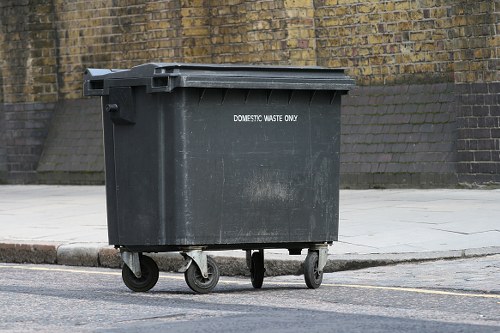 Risk assessments are maintained for all routine and non-routine tasks, including vehicle loading, manual handling of sacks and bins, hazardous waste segregation and use of compactors. Assessments identify hazards, evaluate risks and specify control measures such as mechanical aids, PPE and traffic management. A precautionary approach is used for potentially hazardous materials dropped into commercial waste streams to protect crews and the public.
Operational Controls and Safe Systems
Safe working procedures are enforced for collections, street-side operations and depot activities. Vehicle and plant safety includes pre-use checks, secure loading, reversing alarms and safe parking practices. Permit-to-work systems or other written authorisations are used for confined space entry, maintenance of compactors and other higher-risk tasks. A permit culture underpins work on potentially dangerous equipment.
 Personal protective equipment is provided where risks cannot be eliminated: high-visibility clothing, gloves suitable for waste handling, protective footwear and eye protection. Employees are instructed on proper use and maintenance of PPE; replacements are available through supervisors. Manual handling training and the use of mechanical lifting aids reduce musculoskeletal injuries common in refuse collection operations.
Specific controls for hazardous waste include safe segregation, clear labelling and secure containment. Where waste potentially contains asbestos, sharps, chemical residues or commercial solvents, crews follow incident-aware procedures to isolate the load and notify supervisors. Waste transfer notes and documentation ensure traceability and support compliance with environmental and safety obligations.
Training, Competence and Communication
Training programmes ensure staff are competent to perform their roles in the commercial waste sector. Induction covers core health and safety topics; job-specific training addresses vehicle operation, skip handling, use of lifting equipment and emergency response. Competency assessments and refresher training are scheduled at defined intervals to maintain safe performance.
Supervisors conduct toolbox talks, regular briefings and incident debriefs to reinforce safe behaviours. Communication channels enable staff to report hazards, near-misses or non-compliance without fear of reprisal. The organisation promotes a positive safety culture where continuous reporting contributes to learning and improvement.
Monitoring includes routine inspections, driver tachograph reviews and periodic audits of depot practices. Key performance indicators track incidents, near misses and completion of planned maintenance. Where the company provides specialised services such as commercial waste collection and bulk rubbish clearance, these measures ensure consistent safety standards across all operations.
 Incident management and emergency response procedures are established for spills, injuries, vehicle collisions and hazardous material discoveries. Employees receive first-aid training and know how to summon appropriate assistance. All accidents and near misses are recorded, investigated and lessons learned are shared to prevent recurrence.
Contractor and visitor safety is managed through induction and site-specific rules. Subcontractors working with the organisation on waste projects must demonstrate equivalent safety systems and insurance. The company retains the right to suspend work where unsafe practices are observed.
 The policy will be reviewed at least annually or whenever there is a significant change in work activities, legislation or after a serious incident. Senior management are accountable for ensuring resources are available for implementation and continuous improvement. Employees are required to co-operate with policy requirements and to contribute to a safe working environment in all aspects of waste management and commercial rubbish services.
- Key commitments: prevent injury and ill health, comply with legal obligations, reduce risk in rubbish collection and commercial waste handling.
- Responsibilities: leadership sets policy, managers implement controls, individuals follow procedures and report hazards.
- Controls: risk assessments, PPE, training, safe systems, vehicle safety measures and emergency planning.
By adhering to this Health & Safety Policy, the organisation demonstrates its ongoing commitment to protecting the health and welfare of everyone affected by our commercial waste operations. Periodic reviews, staff engagement and clear operational controls ensure the policy remains effective and aligned with best practice for rubbish services and waste management.
